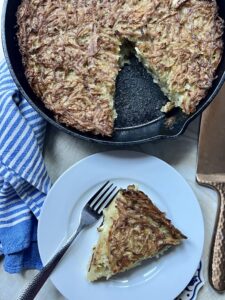
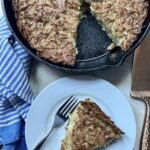
Creamy and fluffy potatoes with crispy, browned edges potato kugel is the ultimate side dish for your table.
What is Potato Kugel?
Kugel literally means pudding or casserole in Yiddish so Potato Kugel is essentially Potato Pudding. But think pudding like bread pudding and less like grandma’s cook and serve pudding. Eggs and a starch severe as binders coupled with the natural starch from the potatoes to create a creamy, fluffy interior texture contrasted with a crisp brown crust.
What’s in Potato Kugel?
- Potatoes (most commonly Russet potatoes are preferred due to their high starch content that promotes a fluffy and creamy middle but crisp exterior desired in kugel).
- Onions – white or yellow onions are grated and mixed in with the potatoes, similar to latkes. The onions add great flavor but don’t worry, if you don’t like the texture of onions, they’re so finely grated that they sort of melt into the kugel.
- Eggs – eggs serve as a natural binder to hold the kugel together, similar to making meatballs.
- Starch – if you’re making kugel for Passover, potato starch or Matzo meal are the way to go. If not, you can sub cornstarch or flour, although personally, I appreciate the starches over flour. The starch is the “glue” or supporting binding agent to keep the kugel together and help you cut it into squares or wedges.
- Fat/Oil – if you can get your hands on schmaltz (rendered chicken fat) do it! You’ll love it! I add schmaltz when I make matzo brei and it’s a game changer because it adds such rich and savory depth. If you can’t find or don’t have schmaltz or if you just want to keep it vegetarian, vegetable oil or olive oil will work just fine.
- Salt and Pepper – simple seasoning means that the potato flavor can really shine through. Plus, since this is served as a side dish, the flavors are not meant to be overpowering but rather to complement the rest of the meal.
What About Noodle Kugel?
It’s true, potato kugel is just one of many types of kugel but noodle and potato are by far the most popular types of kugel. But technically to be called a kugel, it should be a combination of a starch (e.g. potatoes or noodles), eggs and fat. Noodle kugels can be sweet or savory while potato kugels (as far as I know at least) are savory.
What Type of Potatoes are Best?
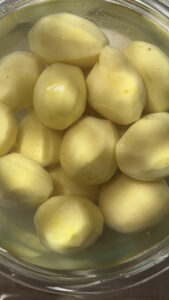
Russet potatoes are prized for a lighter and fluffier kugel because of their naturally high starch content (think: russets are used to make the “perfect french fry” – creamy on the inside and crisp on the outside). But truth be told, I do love Yukon Gold potatoes and the natural creaminess that they possess. While Russets may be preferred, this recipe will work just fine with Yukon Gold Potatoes and will ultimately still be delicious.
How do You Get the Perfect Kugel Texture – Creamy and Fluffy in the Middle, Crisp and Brown Edges?
In addition to choosing the right potato and the right ratios of ingredients, it’s also important to preheat your baking vessel in the oven as your oven preheats. I use a cast iron skillet but casserole pans are far more traditional.
- While you preheat your oven, put the baking dish in the oven too to let it heat up.
- Carefully remove it from the oven and add the oil, being sure to brush the sides of the pan and the bottom of the pan.
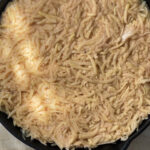
- Pour in the potato mixture, liquid and all and smooth out into an even layer.
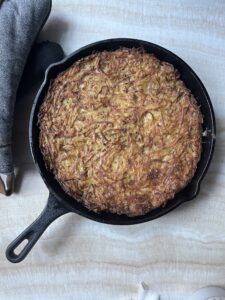
- Bake for 60 to 75 minutes until golden brown and crisp on the exterior and fluffy and creamy in the middle.
What is the history of kugel?
The word has Germanic roots and it was a dish enjoyed by the entire population, including German Jews. Although there are many variations of kugel, including the Yerushalmi Kugel, Jerusalem Kugel, with roots more intertwined to Jerusalem. I found that this article from a favorite site, really does a great job explaining this and other kugels.
Potato Kugel
Ingredients
- 3 lbs potatoes
- 1 large onion about 7 ounces
- 2 large eggs
- 6 tbsp vegetable oil divided
- 4 tbsp potato starch sub: corn starch
- 1 ½ tsp table salt
- ½ tsp black pepper
Instructions
- Preheat the oven to 400 degrees and place cast iron skillet (or other baking dish) in the oven to heat up.
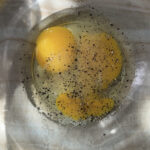
- In a large bowl, whisk together the eggs, 3 tablespoons of vegetable oil, potato starch, salt, and pepper.
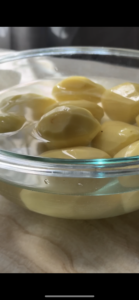
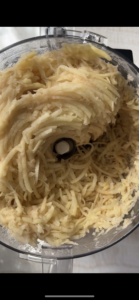
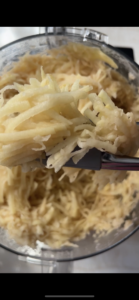
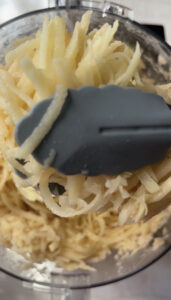
- Peel potatoes and grate them in a food processor, using the fitted attachment, or using the larger holes of a box grater. Note: It's okay if the potatoes start to turn brown, which occurs as a result of oxidation. This will not affect the taste.
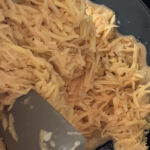
- Grate the onion and add the grated potato and onion both to the bowl with the egg mixture and stir well to combine.
- Using oven mitts or heat protectant kitchen towels, remove the cast iron skillet or baking dish from the oven. Add the remaining 3 tablespoons of oil and use a pastry brush to brush the oil against the sides of the skillet or baking dish.
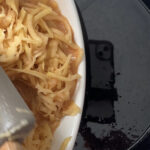
- Carefully pour the potato mixture into the skillet without draining any of the liquid. Note: there will be quite a bit of liquid but it will help achieve the creamy and fluffy texture of the kugel.
- Smooth into an even layer and bake for 60 to 75 minutes, or until the sides and top are golden brown and the inside is set but soft to the touch.
- Cool for 10 minutes and then cut into slices and enjoy.
Leave a Reply